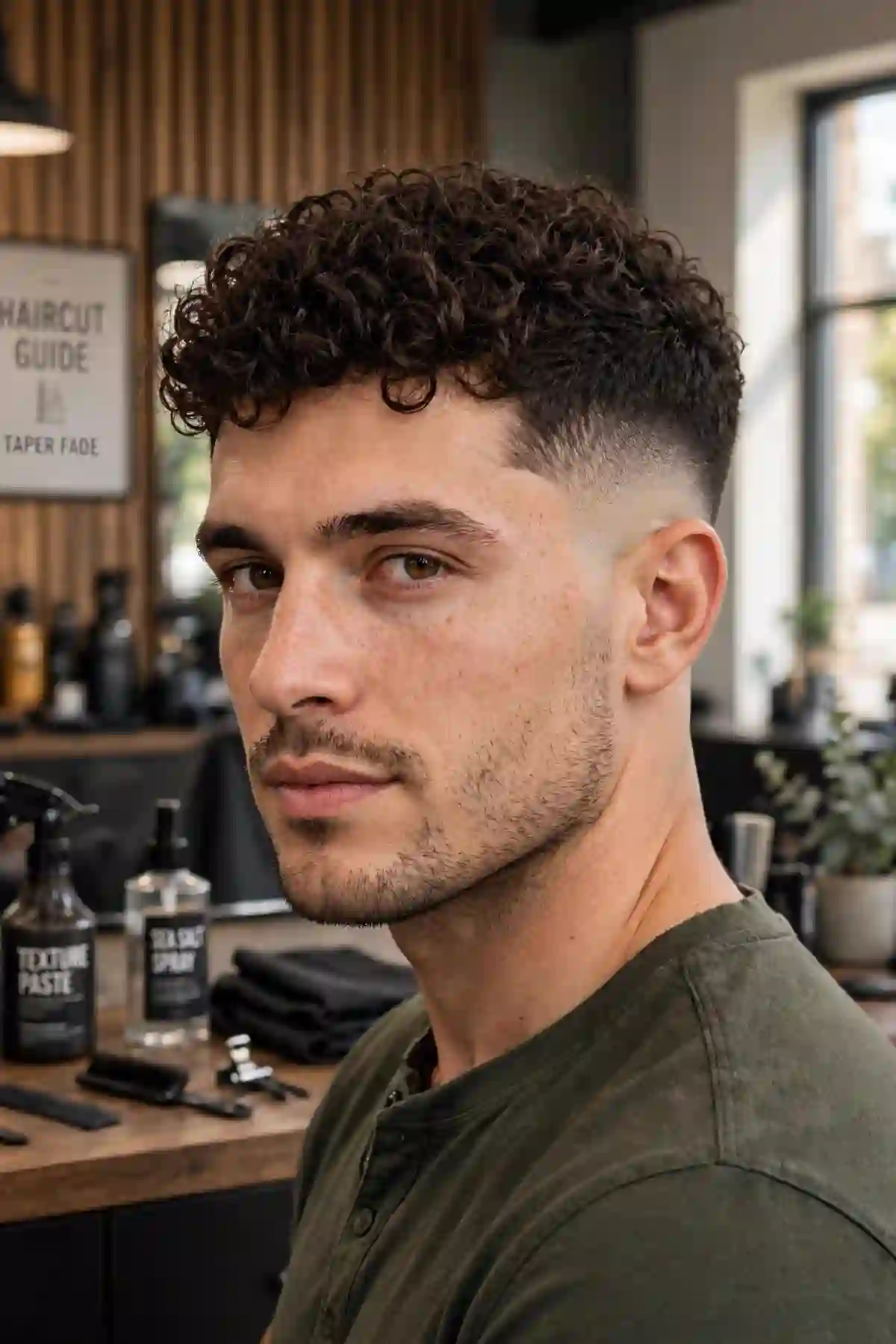
The mid taper fade and coily hair were made for each other. Afro-textured hair holds its shape, stands up with natural volume, and shows a clean blend better than any other hair type — and the mid taper is the fade that cleans up the edges without taking that volume away. It is no surprise this is one of the most requested cuts in the shop.
This guide is the practical version: why the cut works on coily hair, the styles worth asking for (waves, twists, afro, beard and more), the guard numbers that behave differently on curls, how a line-up finishes the cut, the exact script for the chair, and the care routine that keeps it sharp between visits.
Three properties of Afro-textured hair make the mid taper its natural partner.
The blend shows. On straight hair a gradient can look soft and washy. On coily hair, each guard step reads clearly, because the hair stands away from the head and catches the light evenly. A mid taper on 4C hair looks precise almost by default.
The top keeps its power. Waves, twists and an afro all live on top. A high fade or skin fade can cut so much side away that the top looks stranded; the mid taper only cleans the edges, so the style on top stays the main event — exactly what you want.
The outline finishes it. Black men's cuts are judged by the outline: the hairline, the temples, the neckline. The mid taper gives the barber a clean canvas for a line-up (also called a shape-up or edge-up), which is the detail that makes the whole cut look fresh. More on the line-up below.
The wider comparison of taper heights and finishes is in the complete mid taper fade guide, and if you are torn between a taper and a full fade, fade vs taper settles it side by side.
Each of these sits on the same mid taper. The difference is what happens on top.
The classic. The top is cut low — usually a 1.5 or 2 guard with the grain — and brushed into wave patterns, while the taper keeps the edges clean. The mid height is the waver's friend: a high fade eats into the wave pattern at the sides, but the mid taper leaves the waves connected all the way around. If you are training waves, tell your barber you are a waver before he picks up the clippers — it changes how he cuts the sides.
Two-strand twists on top, taper underneath. The twists give length and movement; the taper stops the sides from puffing out and competing with them. Works with short twists (an inch or two) and longer ones — the longer the twists, the more the tidy sides matter. Ask for the taper to be finished before the twists go in, so no loose hair gets caught in the blend.
The top is left at two to four inches, picked out or left as natural curls, and the taper shapes everything below it. This is the lowest-effort high-impact version: the hair does the styling, the barber does the outline. It is also the best first mid taper if you are growing out a low cut and want shape while it grows.
The taper fades down, the beard fades up, and they meet at the sideburn. Done well, there is no line where the haircut ends and the beard begins — one gradient from temple to jaw. Ask the barber to blend the sideburn rather than cutting a hard step, and to line the beard's top edge to match the sharpness of the hairline. The fuller the beard, the better the mid height works; a low taper can leave too much bulk where beard and side meet.
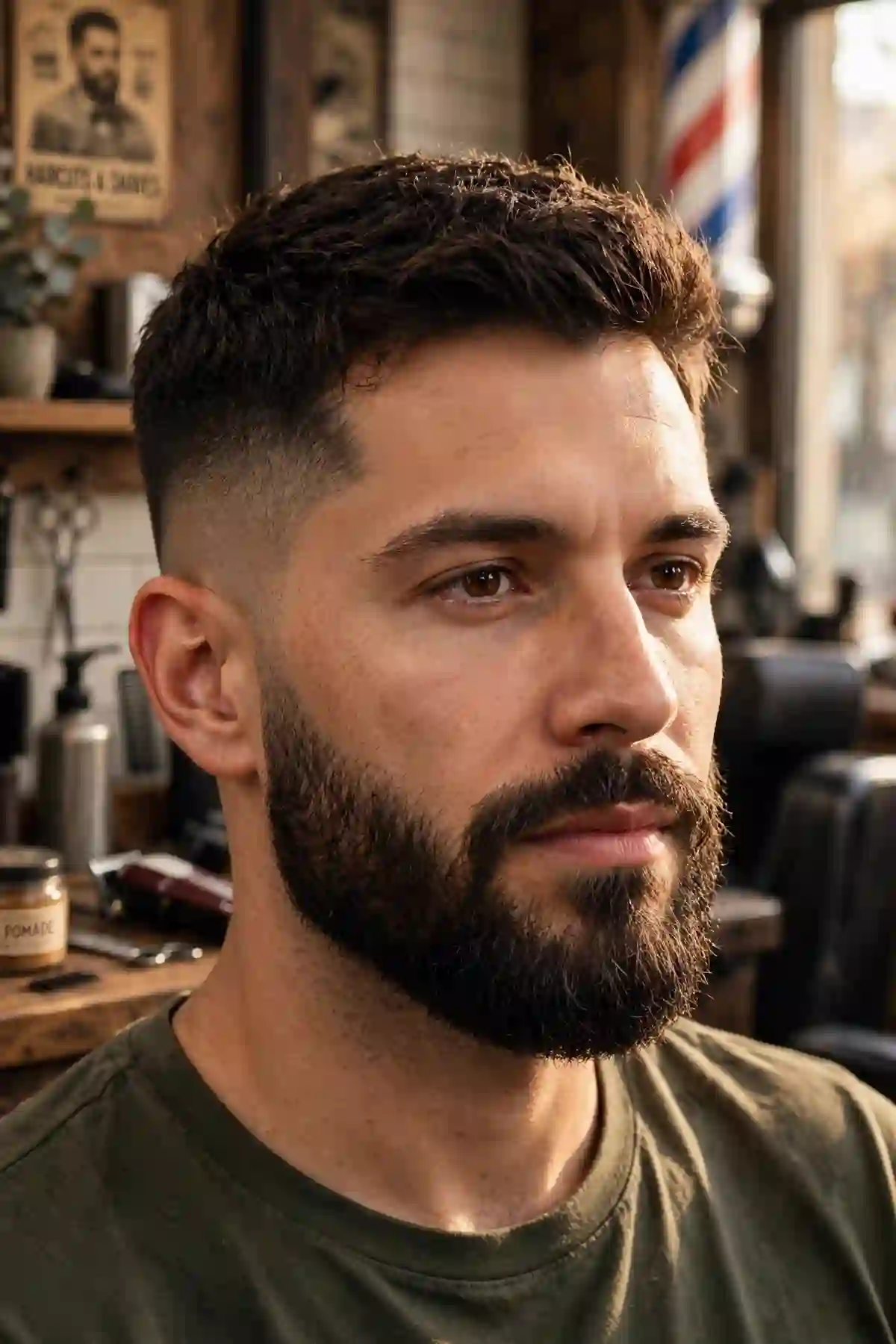
A shaved part, a line, or a small design cut into the taper adds personality without changing the cut. The mid taper's blend is the canvas — designs sit best in the longer part of the gradient, around the temple or above the ear, where there is enough hair to hold the contrast. Keep it simple for work or school: a single clean part reads sharp anywhere.
Yes, it works on coily hair too — the fringe sits fuller and curlier than on straight hair, and the taper keeps it shaped. The full breakdown is in mid taper fade with textured fringe.
The line-up is where the barber uses trimmers to sharpen the hairline, temples and neckline into clean edges. On a mid taper fade for Black men, it is usually the finishing step — and the choice is yours:
One rule matters more than the choice: never let a barber push your hairline back to make the line straighter. A pushed-back hairline looks wrong as it grows and can take months to recover. A good barber lines up the hairline you have. If a shop suggests "fixing" your hairline by moving it, that is your cue to keep your own barber.
The numbers are the same; the behaviour is not. Coily hair springs back and stands up, so the same guard can read shorter and tighter than it does on straight hair — and hair cut wet or stretched will sit shorter again once it dries and curls back.
The bottom of the taper is where you choose the finish. There are three standard options:
Above the bottom, the blend runs the same way whatever finish you pick:
Skin or shadow: which should you choose? There is no universal best finish for 4C hair — it depends on the look you want and how your skin behaves. Skin gives the crispest, highest-contrast edge; shadow gives a softer transition that grows out more naturally. If it is your first mid taper, start with the shadow: it is the sensible starting point, and the kinder choice for sensitive skin. And remember that a finish only looks good if it blends smoothly into the rest of the taper — a poorly blended skin finish looks worse than a well-blended shadow, every time.
The full guard-by-guard map, with lengths in inches and millimetres, is in mid taper fade guard numbers.
"I want a mid taper fade. Start the blend at the temple — a number 1 at the bottom, blended up through a 2 and a 3. Taper the neckline. Leave the top [waves low / long enough for twists / natural], and line me up sharp — but do not push my hairline back. Blend the sideburns into my beard."
Adjust it for your style:
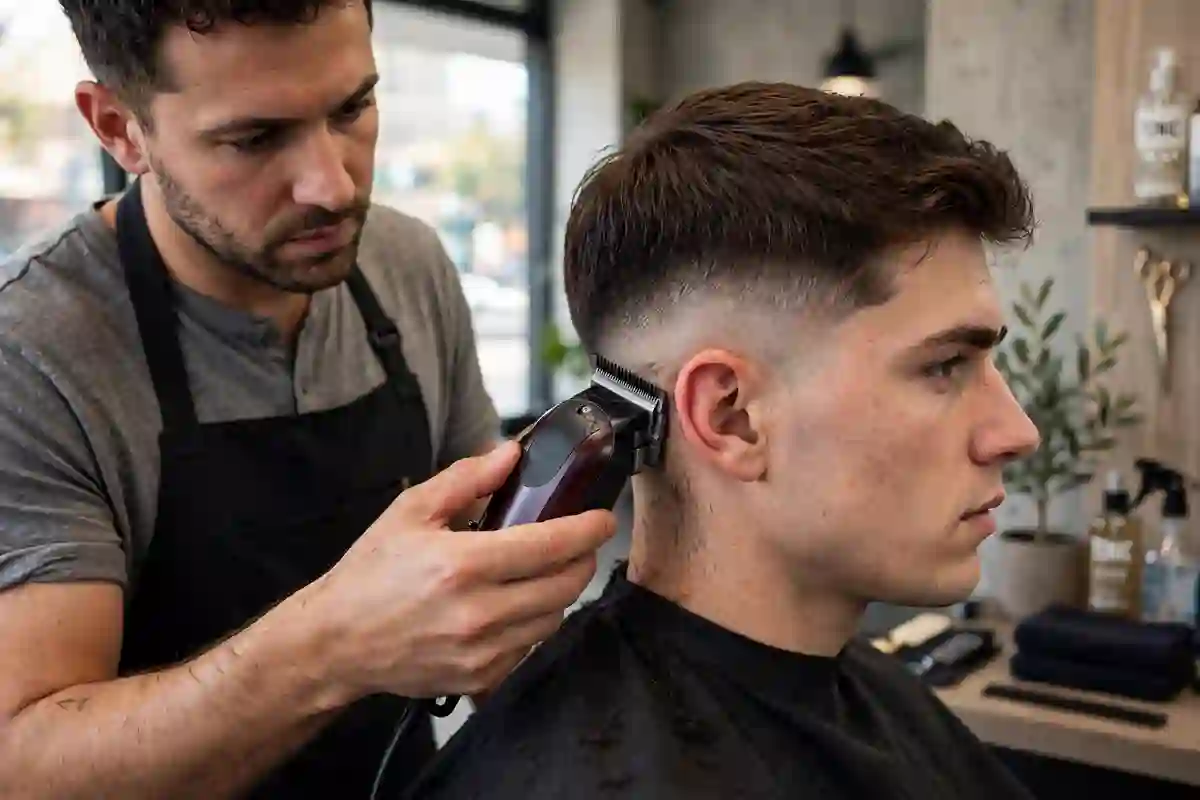
A mid taper on coily hair stays presentable for two to three weeks — but the details around it need a routine, because this hair type dries faster and shows a soft edge sooner.
Moisturise. Coily hair loses moisture quickly, and dry hair looks dull against a fresh taper. A light oil or leave-in worked through the top a few times a week keeps the curls defined and the scalp comfortable. Dry, flaky sides are the fastest way to make a good cut look old.
If you are waving, the routine is the style — the cut just keeps the frame clean. Four steps, every day:
What to avoid: brushing dry hair (it causes breakage), tying the durag too tight (it leaves marks on the forehead), and skipping days (the pattern loosens fast while you are still training it).
Wolfing — growing the top longer between cuts to deepen the waves — works with a mid taper, but book line-up touch-ups during the wolf, or the soft edges undo the effect.
If you are twisting: keep twists moisturised, sleep with a cap to stop them frizzing against the pillow, and do not let the taper grow into the twists — a tidy every two weeks keeps the two halves separate.
How often to go back — pick your tier:
You do not need a full cut at every visit — the line-up tidies between cuts are what keep the style looking fresh. And between visits, a careful home trimmer pass keeps the neckline respectable — or leave it to the barber if your hand is not steady. A wobbly home line is worse than a soft one.
The general grow-out timeline for the taper itself is in how long a mid taper fade lasts.
The shape-by-shape guide with guards and tops per face is in best mid taper fade for your face shape.
These are sample scenarios based on common requests, not real clients.
Marcus, 24, training 360 waves. His old barber kept giving him a high fade that broke his wave pattern at the sides. He switched to a mid taper — top cut with the grain at a 2, sides left high enough for the waves to connect — and kept his durag routine. Two cuts later the waves ran unbroken from crown to edge.
Jay, 29, two-strand twists and a beard. His problem was bulk: twists on top, a full beard below, and sides that puffed out between them. A mid taper with the sideburns blended into the beard removed the middle bulk. The twists and beard now read as one style instead of three.
Dre, 36, short afro, formal job. He wanted shape without a "done" look. A mid taper with a natural line-up — cleaned, never squared, never pushed back — gave him a cut that passes in his office and still looks intentional on the weekend. He books a line-up tidy every ten days.
The hairline got pushed back. The most damaging mistake, and the hardest to undo — the fix is time (months of growth) and a new barber. Prevention is one sentence in the script above: "do not push my hairline back." Say it every visit, even to a barber you trust.
The blend looks uneven or patchy. On coily hair this usually means the hair was cut against the grain or unstretched in places, so lengths varied. A good barber stretches or combs the hair out and cuts with a consistent direction. If it happens, it can be evened at a tidy — do not let anyone chase it shorter and shorter.
Dry, ashy-looking sides a few days after the cut. Not a cutting problem — a moisture problem. Light oil on the sides after a shower, and do not wash the hair daily with strong shampoo; coily hair needs its oils.
Bumps along the neckline. Close finishes can irritate skin at the nape. Ask for the neckline to be finished a touch softer (a shadow rather than skin) if your skin reacts, keep the area clean, and avoid a home trimmer pressing hard on the same spot.
Waves will not connect at the sides. Usually the taper is too high or the top was cut against the grain. Drop to a mid (or low) taper, confirm the top is cut with the grain, and give it two cut cycles of brushing before judging.
Yes — it is the best fade height for waves. A mid taper cleans the edges while leaving the sides high enough for the wave pattern to stay connected all the way around. A high fade breaks the pattern; a low taper also works but leaves more bulk. Cut the top with the grain and keep up the brushing and durag routine.
About a week at its crispest. The edge starts softening within days as new hair grows, and by two weeks most men want a touch-up. A natural line-up ages more gracefully than a sharp one. Many men book a quick line-up visit between full cuts — it takes minutes and keeps the whole cut looking fresh.
A number 1 is the standard starting point — on coily hair it already reads clean and close. A 0.5 or skin finish is tighter and sharper but shows regrowth within days and can irritate sensitive skin at the neckline. A number 2 bottom is the soft, shadow option. Remember that coily hair reads shorter than the same guard on straight hair.
It is one of the best cuts for it. The tight coils of 4C hair hold a dense, defined shape, and the mid taper frames that shape with clean edges while leaving the volume on top untouched. The blend reads crisply on coily hair, the line-up finishes the outline, and the taper grows out more gracefully than a skin fade. The keys are the ones in this guide: pick the bottom finish your skin can handle, keep the hairline where it belongs, and moisturise between visits.
Absolutely — it is a natural combination. The afro keeps its rounded shape and natural volume on top while the taper cleans up the temples and neckline underneath it. Ask the barber to shape the afro evenly rather than cutting it flat, and to finish with a line-up: sharp if you want the outline defined, natural if you want it softer. It is also one of the easiest versions to maintain — moisture, an occasional pick to shape it, and the usual line-up schedule.
The taper fades down and the beard fades up, meeting at the sideburn with no hard step. Ask the barber to blend that junction and to line the beard's cheek line to match the hairline's sharpness. The fuller the beard, the better a mid taper suits it — a low taper can leave a bulky shelf where the side meets the beard.
Every two to three weeks for the full cut, with a line-up touch-up every one to two weeks between. Coily hair shows regrowth at a sharp edge sooner than straight hair does, so the schedule runs a little tighter than average — the line-up visits are what keep it looking fresh without paying for a full cut each time.
Neither is better — they are different finishes. A skin fade is sharper and bolder, and shows regrowth fastest. A mid taper keeps visible hair at the edges, grows out more gracefully, and protects styles like waves that need the sides connected. Most men who wear both end up on the taper for everyday life and the skin fade for occasions.
Yes — it is one of the most popular school-age cuts for a reason: sharp in photos, tidy for school, and forgiving as it grows out. For younger boys, ask for a natural line-up rather than a sharp squared one; it looks better as it grows and needs less upkeep.
For Black men, the mid taper fade is the cut that respects what coily hair does best: it shapes the outline, finishes it with a clean line-up, and leaves the top — waves, twists, afro or curls — with all its volume intact. Ask for a 1 at the bottom blended through a 2 and a 3, keep the hairline where it belongs, moisturise between visits, and book the line-up before the full cut is due. That is the whole formula.
Save the script, bring a photo of the top you want, and say the hairline sentence out loud. A barber who hears "do not push my hairline back" knows exactly the kind of client you are — and the kind of cut you expect.
← Back to the complete guide: Mid Taper Fade — styles, guard numbers & barber tips
Also see: Mid taper fade with textured fringe — the forward-falling top, in full. Mid taper fade guard numbers — what 0.5, 1, 2 and 3 really look like. Best mid taper fade for your face shape — the shape-by-shape guide. And Fade vs taper — the wider comparison.