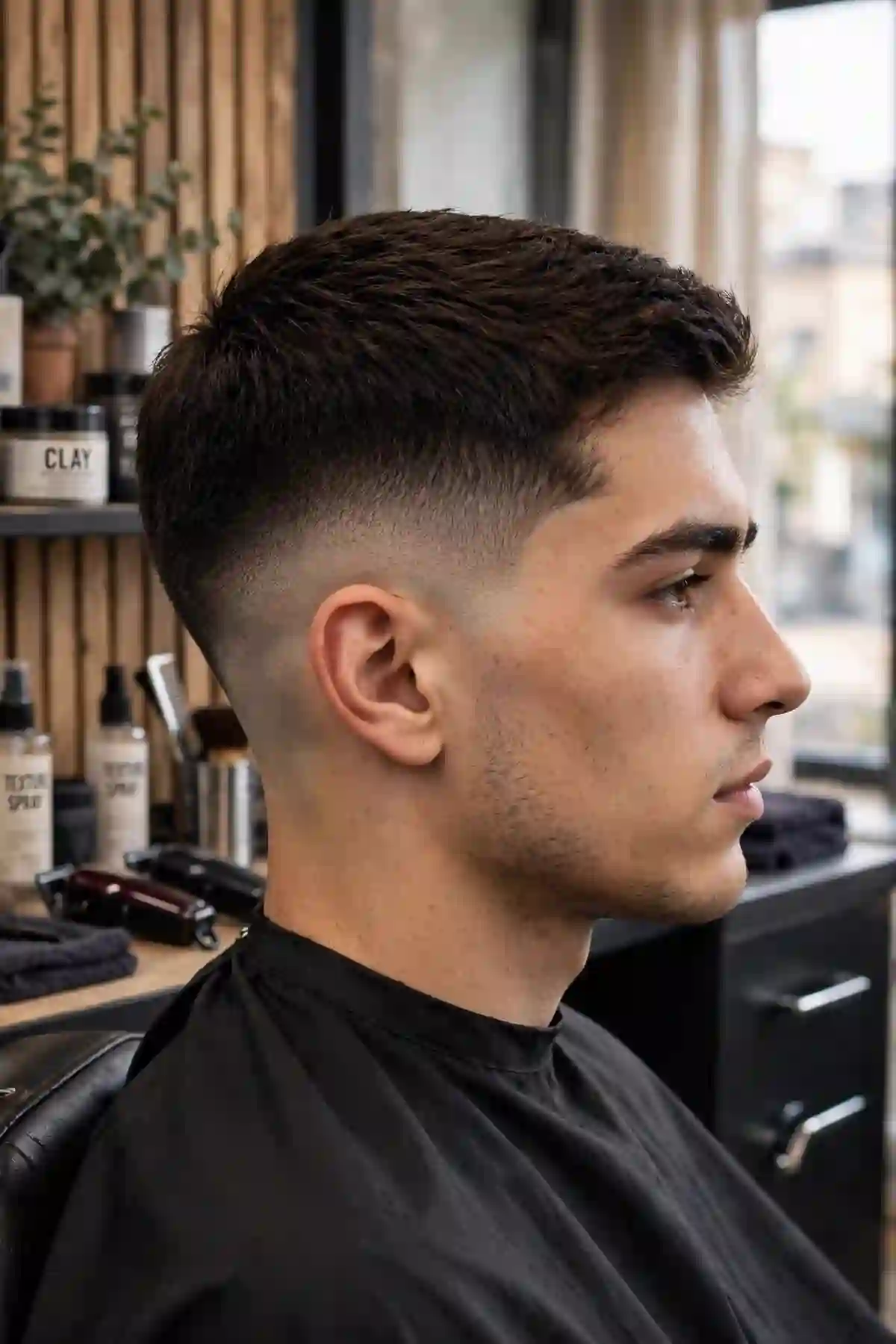
Walk into any barbershop and say "fade" and the barber will reach for the clippers. Say "taper" and he will reach for the same clippers — but the haircut you walk out with will not be the same. The two words sound like synonyms. They are not.
A taper shortens the hair gradually and keeps some length at its shortest point, so the edges look soft and natural. A fade blends the hair down much further — often to the skin — so the change from short to long is sharper and easier to see. Everything else — how often you need a cut, how it grows out, which face it suits — follows from that one difference.
This guide explains fade vs taper side by side, shows where the popular hybrid (the taper fade) fits, helps you pick the right one for your face and hair, and gives you the exact words to say at the chair.
If you want a cut nobody will question — at work, at a wedding, at a job interview — start with a taper. If you want the sides to look deliberately sharp and modern, pick a fade. If you want both, ask for a taper fade.
A taper is the older, quieter cut. The barber shortens the hair step by step as he moves down the sides and back, but he stops while there is still visible length left. The sideburns taper into the beard or the skin naturally, and the neckline is left with a soft, natural edge instead of a hard line.
Because the shortest point still has hair on it, a taper grows out gracefully. Two weeks in, it still looks like the same haircut, just slightly longer. That is why tapers have been the default for office workers, older gentlemen and anyone who stretches the gap between haircuts for so long.
A taper on its own is not a style — it is a finishing technique. It can sit under a side part, a slicked-back top, a short crop or a pompadour. The top decides the style; the taper just keeps the edges tidy.
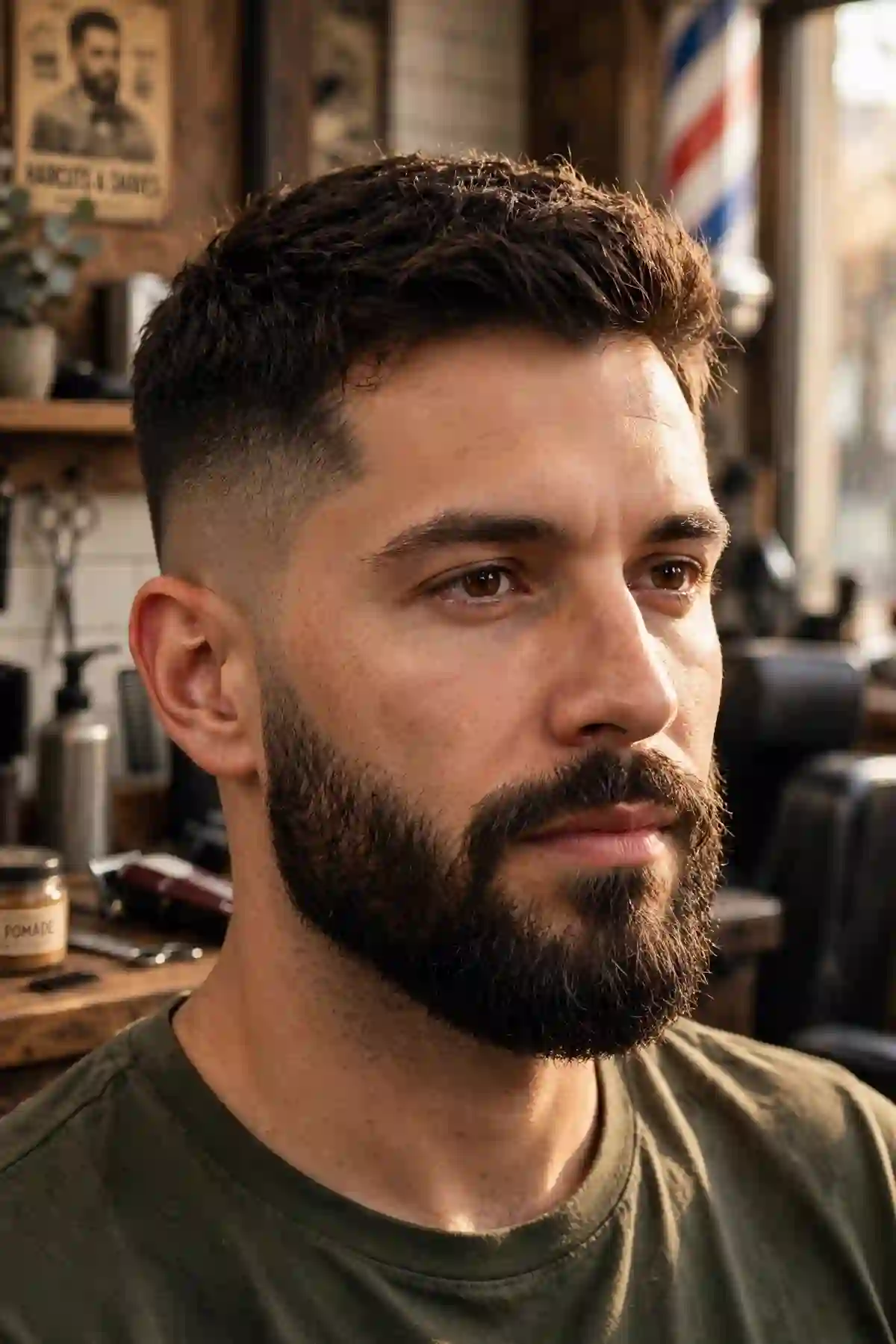
A fade takes the same idea and pushes it further. The blend runs down to a very short guard, a zero, or bare skin, and it does so over a short distance — so the change from skin to hair is visible and deliberate. Where a taper whispers, a fade speaks clearly.
Fades come in heights, and the height is the whole decision. A low fade keeps the blend near the ears and stays subtle. A mid fade starts around the temple and looks clean and modern. A high fade starts near the top of the sides and is the boldest of the three. A skin fade (also called a bald fade) takes the bottom right down to bare skin.
The price of that sharpness is maintenance. A fade looks its best for about a week to ten days. After two weeks the blend starts to blur, and after three or four the shape is mostly gone. Fades are a commitment to regular visits — every two weeks if you want it razor-sharp.
| Taper | Fade | |
|---|---|---|
| Shortest point | Still has visible hair (usually a 1 or 2 guard) | Very short, zero, or bare skin |
| Blend | Gradual, over a longer distance | Fast, over a short distance |
| Contrast with the top | Soft | Strong |
| Neckline | Natural, soft edge | Sharp, often lined up |
| Grow-out | Graceful — looks tidy for 3–4 weeks | Shows regrowth fast — best for 1–2 weeks |
| How often to re-cut | Every 3–4 weeks | Every 2 weeks for a sharp look |
| Maintenance cost | Often lower over time | Can be higher with frequent visits |
| Barber technique | Edge-focused blending | Wider, detailed blending |
| Work-friendly | Very — the safest choice | Yes, with a neat top — low and mid fades pass easily |
| Best for | First-time clients, conservative offices, longer gaps between cuts | Clean modern looks, showing off the top, sharp photos |
| Common mistake | Asking for a "fade" and getting a taper that is too soft | Asking for a "taper" and getting a skin fade that is too harsh |
Notice the chain: because a fade goes shorter, the contrast is stronger; because the contrast is stronger, regrowth shows sooner; because regrowth shows sooner, you are back in the chair sooner. A taper is the same chain run in reverse. Neither chain is wrong — you are choosing how much upkeep you want to buy with how much sharpness.
This is where most of the confusion lives, because the taper fade is the cut most people actually want when they say "fade."
A taper fade blends the sides down like a fade, but it starts the blend at taper height and keeps the shortest point soft — a 0.5 or a 1 guard, not bare skin. You get the fade's clean gradient without the harshness of a skin fade, and you get the taper's natural neckline instead of a hard line.
The mid taper fade is the best-known version: the blend starts around the temple, the top stays longer, and the sides step down through the guards. It is the middle of the road in every sense — sharper than a plain taper, softer than a skin fade — which is why it suits so many faces and workplaces. The full comparison with its closest rival is in mid taper fade vs low fade.
Other hybrids you will hear at the chair: the low taper fade (blend starts near the ear, the subtlest hybrid), the taper fade with textured top (the most popular pairing right now), and the skin taper (a taper that dips to skin only at the very edges). They are all the same idea at different heights.
Nobody can crown one winner. Your face shape, your hair type and your daily life decide it. Run through the three lists below and the answer usually picks itself.
For the full shape-by-shape guide, with the guard and the top style for each face, see best mid taper fade for your face shape.
Yes — and most modern cuts already do. The taper fade is the combination. But there are a few specific combinations worth knowing by name, so you can ask for them directly:
If your barber suggests a combination you have not heard of, ask him to point to where the blend starts and how short the shortest point goes. Those two answers tell you everything — the name on top of them barely matters.
You may have seen this rule mentioned in barber videos. It is a simple way to remember the guard order for a basic taper fade, and it is useful to know — even if you never touch a clipper yourself.
For reference, here is what each guard number actually leaves on your head:
| Guard | Hair left |
|---|---|
| #0 (no guard) | Very short — stubble |
| #0.5 | About 1.5 mm |
| #1 | About 3 mm |
| #2 | About 6 mm |
| #3 | About 10 mm |
| #4 | About 13 mm |
Three guards, three zones, one smooth slope. Barbers rarely follow it literally — head shape, hair thickness and the fade height all change the numbers — but when a barber says "3-2-1," this is the map he means. The full guard-by-guard breakdown, with what each number actually leaves on your head, is in mid taper fade guard numbers.
In most barbershops a taper and a fade cost the same. The chair time is the same, the tools are the same, and only the clipper travel changes. A men's haircut with either cut typically runs about $25 to $45 at a neighborhood barbershop in the US, and more in big cities or upscale shops. A tip of 15 to 20 percent is common.
What differs is how often you pay it. A fade client who wants it sharp is back every two weeks; a taper client can stretch to three or four. Over a year, the taper is the cheaper haircut — not per visit, but per year.
Time in the chair is usually 30 to 45 minutes for either cut, a little longer if a beard trim is added. Ask for the price before you sit down, and check whether the beard trim costs extra.
Hair grows about half an inch a month on average. Here is how each cut behaves as it grows — this is the part nobody tells you before your first fade.
Taper:
Fade:
The cheap middle path: a taper tidy at week two or three. The barber cleans just the edges and the neckline, leaves the top alone, and the cut looks new again for a fraction of the price. For the full week-by-week picture on the mid taper fade specifically, see how long a mid taper fade lasts.
These are sample scenarios based on common requests, not real clients.
Omar, 26, thick wavy hair, first fade. He asked for a skin fade because he liked the photos. The contrast was so strong that his waves on top looked thin by comparison, and by week two the regrowth was obvious. He switched to a mid taper fade with the same top. Same barber, same chair — the cut finally matched the photos he had liked.
Daniel, 38, works in insurance. He wanted a fade but his office is formal. His barber gave him a taper with a side part instead of the mid fade he asked for. He kept the neat look, nobody at work noticed a change, and he now stretches four weeks between visits instead of two.
Chris, 31, full beard, round face. He asked for a taper and had the sideburns blended into the beard. The taper kept width at the sides, which suited his round face, and the cut and beard read as one shape with no hard line between them. When he later tried a high fade, his face looked longer and thinner — he went back to the taper within a month.
Most bad cuts come from vague requests. Save this on your phone and read it out.
For a taper:
"I want a taper, not a skin fade. Keep some length at the shortest point — a number 1 or 2 at the bottom — and blend it up gradually. Leave the top as it is, just tidy the edges, and keep the neckline natural. Here is a photo."
For a fade:
"I want a mid fade. Start the blend at the temple, take the bottom down to a zero, and blend it up. Leave about 2 to 3 inches on top. Line up the front, and keep the neckline sharp. Here is a photo."
For a taper fade (the middle option):
"I want a mid taper fade. Start the blend at the temple, a number 1 at the bottom, and blend it up to a 2 and a 3. Leave about 2 to 3 inches on top. Taper the neckline, and keep the sideburns natural. Here is a photo."
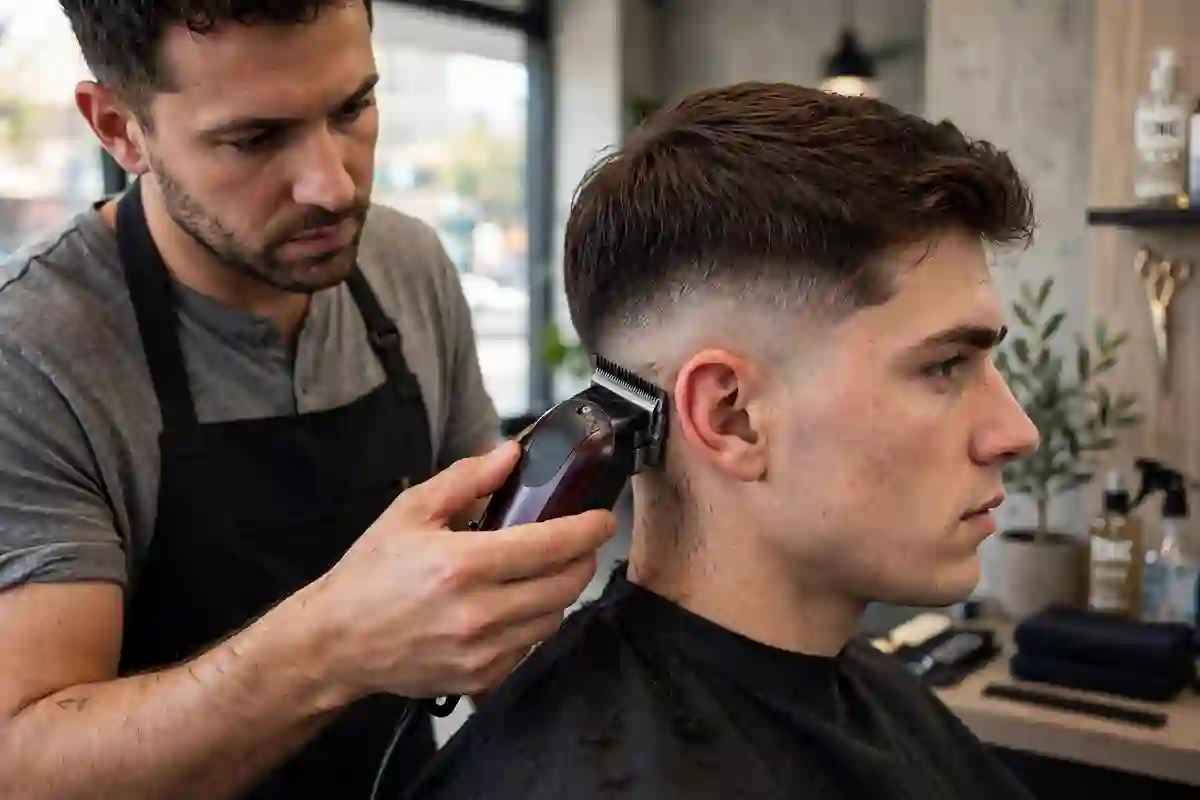
Also mention a cowlick or a receding hairline — a good barber will cut around it. And show the photo anyway. Words fix the height and the guards, but a picture fixes everything words cannot reach. With a new barber, ask him to leave it a fraction longer than the photo: length can come off in the same visit, but it cannot go back on.
Want to try the clipper work yourself? The step-by-step guide to doing a mid taper fade at home covers the tools, the guard order and the blending.
The fade came out too high. Point to your temple next time and say "mid" or "low." For now, ask for a touch-up in two weeks while it grows.
The taper came out too soft. You probably wanted a taper fade, not a plain taper. Ask for the blend to start higher and the bottom guard to drop one number.
There is a harsh line between top and sides. Ask the barber to blend it with a lighter guard, or to use the clipper-over-comb technique on the transition.
The top looks flat. Blow-dry it up and forward, then add a little clay at the roots. A taper fade with a flat top is usually a styling problem, not a cutting problem.
A cowlick fights the cut. Leave extra length where it sits and style it in the direction it grows. Never cut a cowlick short — it only sticks up more.
The neckline looks drawn-on. That is a lined-up fade, not a taper. Ask for a natural taper at the neck next time if you want the softer finish.
Neither wins every time. A taper is better if you want a soft, low-maintenance cut that fits any workplace. A fade is better if you want sharp contrast and a modern look and you are happy to visit the barber every two weeks. If you cannot decide, the taper fade sits between them.
A taper keeps visible hair at its shortest point and blends gradually. A low fade blends down to very short or bare skin, but only near the ears and neckline. The low fade has more contrast; the taper is softer and grows out more gracefully.
Yes. The combination is called a taper fade — the fade's smooth blend with the taper's soft edges. The mid taper fade is the most popular version. You can also ask for a taper on the sides with a faded neckline, or a fade with tapered temples.
It is the guard order for a basic taper fade: a number 3 guard where the sides meet the top, a number 2 for the middle of the blend, and a number 1 at the bottom. It is a starting map, not a strict rule — barbers adjust it for head shape and hair type.
The mid taper fade is the safest all-rounder: sharp enough to look modern, soft enough for most workplaces, and it suits the most face shapes. A low taper fade is the subtlest; a high taper fade is the boldest.
Easier than a skin fade, harder than a plain taper. Expect a tidy-up every two to three weeks, with the blend holding its shape for about two weeks. A taper tidy at week two stretches it further.
First-time fade clients, anyone in a conservative office, and anyone who wants the fade look without the two-week maintenance cycle. It is also the best first step if you have only ever had tapers.
A mid fade suits more people — it is cleaner than a low fade without being as bold as a high fade. A high fade suits oval and square faces and short, textured tops. On a long face, a high fade can make the face look stretched.
Say: "A low taper fade. Start the blend just above the ear, a number 1 at the bottom, blend it up. Leave the top as it is." Show a photo of the exact height you want — "low" means different things to different barbers.
No. Fades are still one of the most requested cuts, but the trend has moved toward softer versions — taper fades and textured tops rather than harsh skin fades. The mid taper fade is the version most barbers are cutting right now.
About two weeks at their best, respectable to three. After four weeks the blend is mostly gone. A taper version of the same cut lasts a week longer between visits.
Almost every barber can cut a taper. A good fade needs more blending skill, so check the barber's photos first — if his feed is full of clean fades, you are in safe hands. If not, start with a taper fade and judge the blend before going shorter.
A taper keeps length and forgives you. A fade takes length away and rewards you with sharpness. The taper fade — and the mid taper fade in particular — is where most people land once they have tried both: the fade's clean gradient, the taper's soft edges, and a maintenance schedule a normal person can actually keep.
Still torn? Start with a taper fade. It is the one cut you can adjust in either direction at your next visit — shorter toward a fade, softer toward a taper — without growing anything out first. Save the script above, bring a photo, and say the height out loud.
← Back to the complete guide: Mid Taper Fade — styles, guard numbers & barber tips
Also see: What is a mid taper fade? — the plain-English definition and who it suits. Mid taper fade guard numbers — what 0.5, 1, 2 and 3 really look like. Best mid taper fade for your face shape — the shape-by-shape guide. And Mid taper fade vs low fade — the closest comparison.